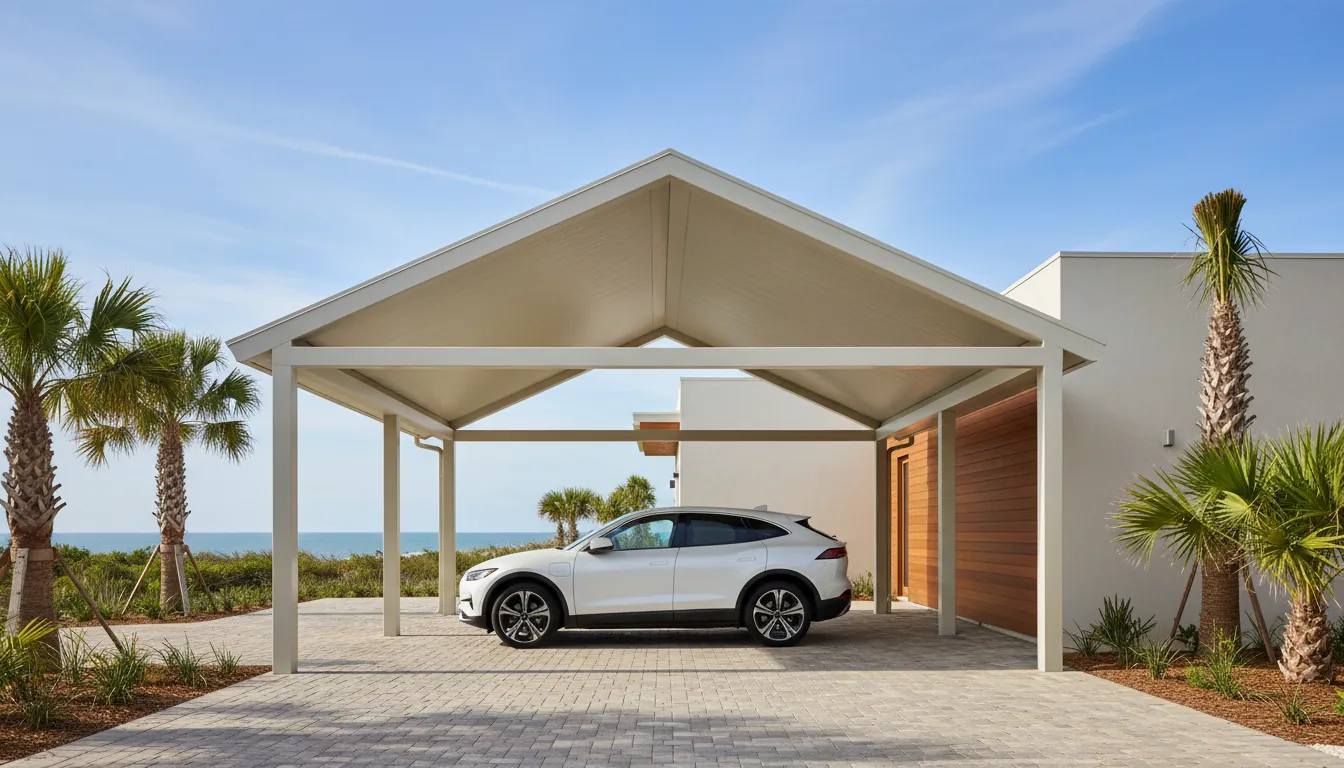
A car left in direct Gulf sun is not simply warm. It becomes an oven. Interior temperatures can climb to 145 degrees Fahrenheit, while surfaces inside reach 195 degrees Fahrenheit. That level of heat attacks dashboard plastics, seat leather, steering wheel coatings and every electronic module behind the trim. A well-placed carport changes the equation completely, but only if the materials and the shape are chosen with the local climate in mind.
Metal remains the most practical structural choice for covered parking in Qatar and the wider Gulf. Steel and aluminium resist the region’s two most persistent enemies: intense UV radiation and wind-blown sand. Unlike timber, metal does not rot, warp or attract termites. The challenge is not whether metal works here. The challenge is stopping it from becoming a radiant heater parked above your car.
Why metal works in hot, sandy conditions
Steel carports earn their place through sheer durability. A steel frame shrugs off flying debris during shamal winds and does not crack under repeated thermal expansion. Unlike fabric canopies that fade and tear within a few seasons, powder-coated steel keeps its shape for years. The material also resists pests and rot, which removes a whole category of maintenance.
Aluminium deserves special attention for coastal homes in places like Al Khor or Doha’s waterfront districts. Salt-laden air accelerates rust on ordinary steel, but aluminium naturally resists corrosion. It is lighter than steel, which makes installation faster and reduces the load on existing paving. The trade-off is initial cost, though the longer lifespan near the coast often balances that out.
One more advantage of metal carport kits is portability. Prefabricated components can be disassembled and moved to a new villa if you relocate. That flexibility matters in the Gulf, where rental contracts and property changes are common. A carport built from bolted steel sections is an investment you can take with you rather than leave behind.
Choosing a roof shape that sheds heat
Flat metal roofs are the worst option for Gulf summers. They collect solar radiation across the entire surface and transfer it straight down to the vehicle below. A peaked or A-frame roof works far better because it creates an air gap between the hot metal sheet and the car. That gap allows heat to dissipate before it reaches the parking area.
Vertical roof panels add another layer of protection. The raised ribs create channels for hot air to escape, much like a ventilated facade on a building. This design also handles the rare but intense rainstorms that sweep through the region. Water runs off quickly instead of pooling on a flat sheet and finding its way through the seams.
Light-coloured metal is the final piece of the roof equation. Pale grey, white or sand-toned finishes reflect a significant share of solar radiation instead of absorbing it. Dark charcoal roofs look dramatic in photographs, but they turn a carport into a heat trap. In this climate, performance has to win over appearance.
Insulation that changes the temperature story
Metal conducts heat quickly, which means an uninsulated carport interior often matches the outside air temperature. On a 45 degree Celsius afternoon, that is not protection. It is shade with a hot ceiling. Insulation interrupts that transfer and keeps the space under the roof measurably cooler, especially during the hours when the sun is directly overhead.
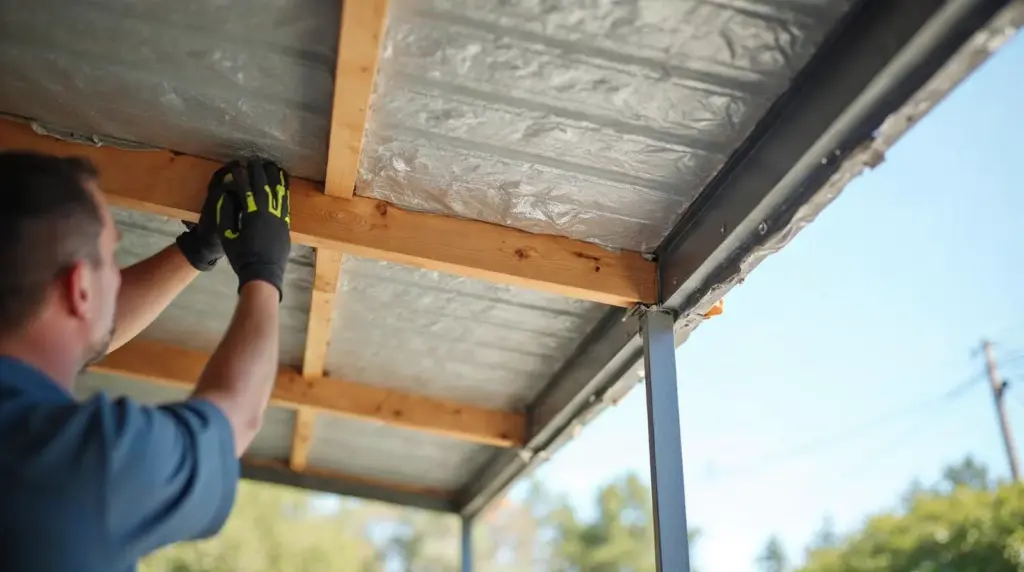
Radiant barrier insulation is particularly effective in this region. A reflective surface facing the metal roof can bounce back a large share of radiant heat before it enters the parking area. Some products reflect up to 97 percent of radiant heat and lower the temperature beneath the carport by 10 to 15 degrees Fahrenheit. That difference is enough to protect paint finishes and make the car bearable to enter.
Foam boards and spray foam offer a different approach. They create a physical barrier that slows both heat and moisture movement. Rigid foam panels are easy to cut and fit between metal framing members. Spray foam expands into gaps and seals them completely, which also keeps out rodents and insects looking for shelter.
Ventilation matters as much as insulation
Insulation alone cannot solve every heat problem. If hot air cannot escape, the carport becomes a stagnant pocket that holds warmth long after sunset. Open or partially open designs allow natural air movement to carry heat away. Side walls should be kept minimal, especially on the prevailing wind side.
A carport with a solid roof but open sides performs better in the Gulf than a fully enclosed garage without mechanical ventilation. The roof blocks direct sun while cross-breezes strip away accumulated heat. This design helps prevent interior temperatures from climbing to damaging levels, which can reach 145 degrees Fahrenheit or more in direct sunlight. If a fully enclosed garage is necessary, add high-level vents or a powered exhaust fan to prevent the space from becoming a heat reservoir.
The best results come from combining a light-coloured roof, a radiant barrier and generous ventilation. Each element does a different job. The colour reflects solar gain, the barrier blocks radiant transfer, and the airflow removes whatever heat still builds up. Together, these features help keep the covered space cooler and reduce heat-related wear on vehicles and stored items.
| Insulation type | Best use in Gulf carports | Key benefit | Installation difficulty |
|---|---|---|---|
| Radiant barrier | Under metal roof panels | Reflects radiant heat before it enters | Low to moderate |
| Rigid foam board | Between framing members | Blocks heat and moisture, deters pests | Moderate |
| Spray foam | Sealing gaps and irregular spaces | Creates an airtight thermal seal | Professional recommended |
| Fiberglass rolls | Enclosed garage walls and ceilings | Budget-friendly thermal resistance | Moderate |
| Pre-insulated panels | New custom-built carports | Factory-fitted, saves time on site | Low |
Choosing between these options depends on whether you are upgrading an existing carport or specifying a new one. Pre-insulated panels from a manufacturer remove the guesswork and often come with warranties, which gives you long-term peace of mind. Adding insulation yourself is possible with basic tools, but sealing gaps properly is essential for it to perform. Any unsealed openings can allow hot air to infiltrate and drastically reduce the material’s ability to handle heat.
Driveway surfaces under a carport
The ground beneath a carport does more than support the vehicle. It affects how much heat radiates upward into the car and how clean the space stays. Dark asphalt absorbs solar energy and releases it slowly, turning the parking area into a secondary heat source. Concrete performs better because it reflects more light and stays cooler underfoot.
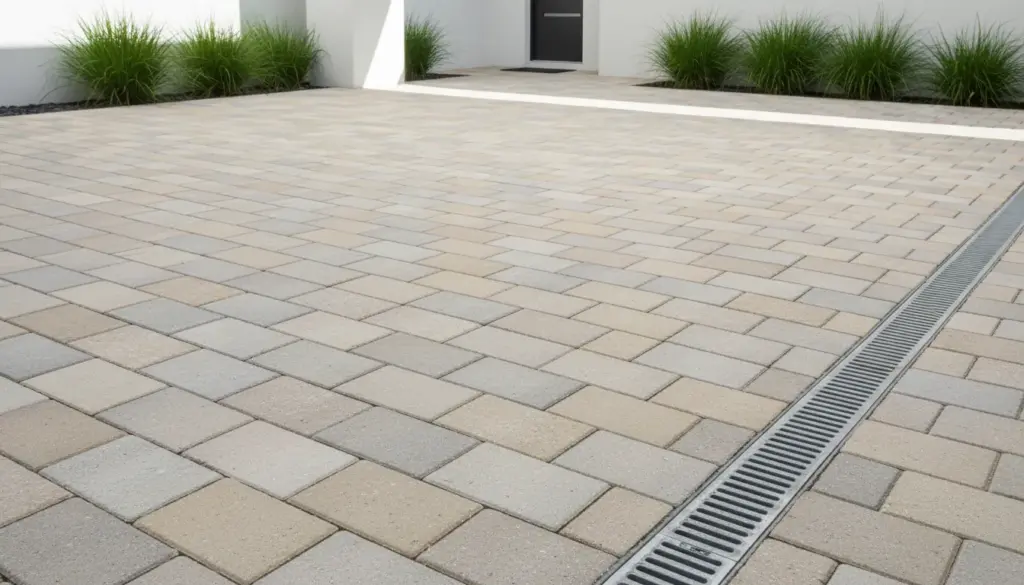
Pavers offer a middle path with practical advantages. Interlocking concrete blocks allow water to drain through the joints, which prevents puddles after rare heavy rains. They also tolerate ground movement better than a solid slab, reducing the chance of cracks that trap sand and dust. Choose light-toned pavers to keep surface temperatures lower.
Whatever surface you choose, it needs a slight slope away from the carport. Standing water attracts mosquitoes and leaves mineral deposits on the car’s lower panels. A fall of one to two percent is usually enough to keep the area dry without making the surface feel uneven underfoot. This gentle grade also helps direct rainwater away from the structure.
Anchoring against wind and shifting ground
Gulf winds can arrive suddenly and with surprising force. A carport that is not properly anchored becomes a hazard to both the vehicle beneath it and the house beside it. The structure should be bolted to a concrete foundation or secured with ground anchors driven deep into compacted soil. Lightweight aluminium frames need particularly careful attention here.
Aerodynamic design reduces wind pressure on the structure. Open sides allow gusts to pass through rather than pushing against a solid wall. The roof itself should be fixed with fasteners rated for high-wind zones, not simply clipped into place. Local building authorities publish wind load requirements, and any reputable installer should design to those figures.
Regular inspection of anchor points is part of responsible ownership. Sand and salt can work their way into fixings over time, loosening bolts and corroding washers. This is especially true in coastal regions, where salt air accelerates corrosion on metal components. A quick check at the start of each summer takes minutes and prevents problems that would otherwise appear during the first strong shamal.
Planning a carport that adds real value
A covered parking space is a genuine selling point in the Gulf, where almost every household owns at least one car and many own two or three. Buyers and tenants understand the difference between a car that has spent years under shade and one that has baked in the sun. That understanding translates into higher rents and faster sales when the time comes. Customisation is where carports become more than parking. The same structure can shelter a second vehicle, a boat trailer or a shaded workspace for projects that are too dusty for inside the house. Because metal carports are made from prefabricated pieces, they can be assembled in different layouts to suit these varied needs. Some homeowners use the space for outdoor storage of tools and camping gear, keeping the garage itself free for a home gym or workshop.
Think through how the carport will be used before ordering a kit. The size, roof height and side clearances all depend on what needs to fit underneath. A standard saloon car has different requirements from a tall four-wheel drive with a roof rack. Getting those dimensions right at the planning stage avoids expensive modifications later.