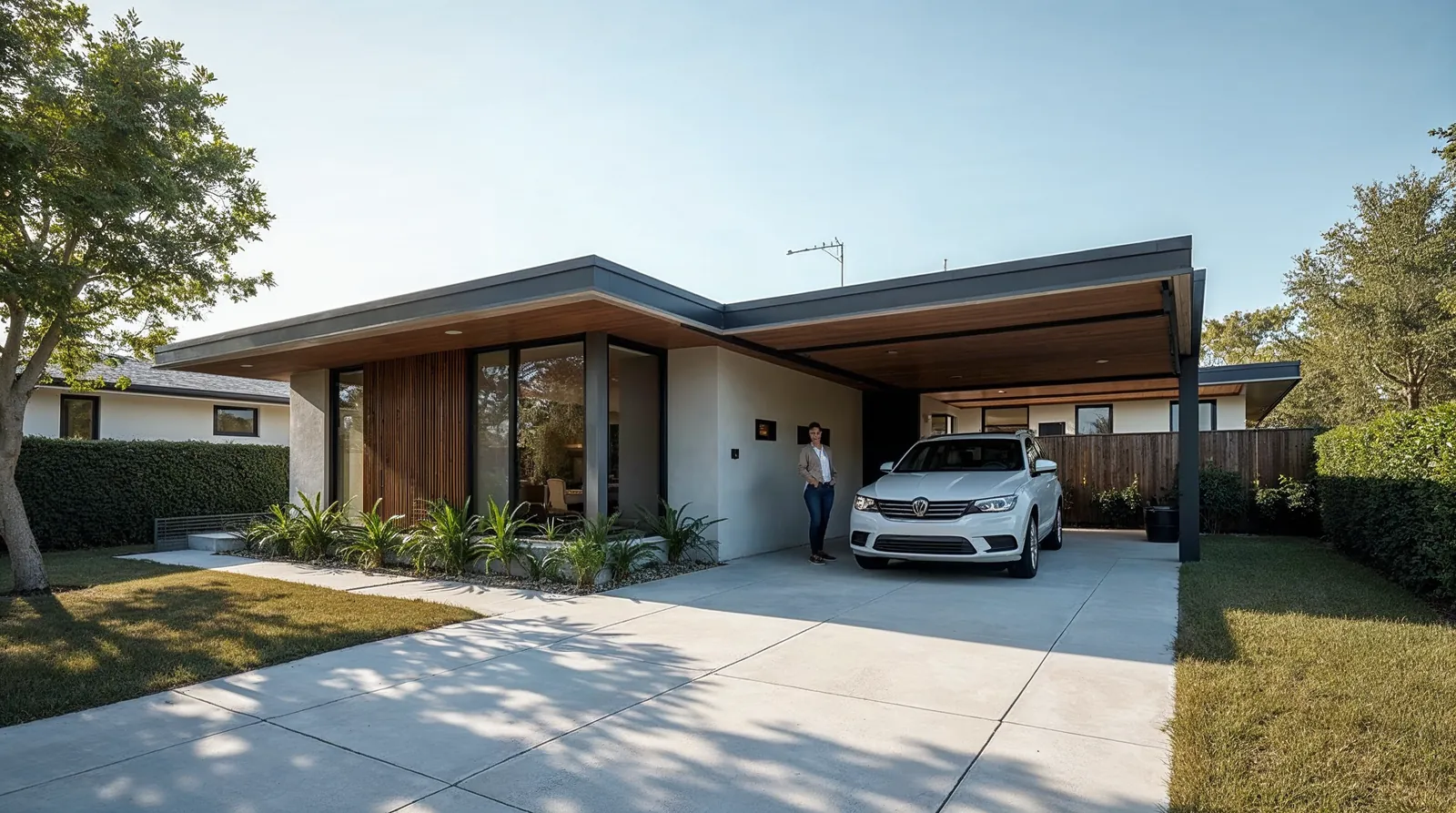
A car left on an open driveway in Doha during July is not simply parked. It is being slow-cooked. The steering wheel turns into a branding iron, the seat belt buckle becomes a minor hazard, and the dashboard exhales heat long after the engine has stopped. Covered parking changes that equation before you even open the door. The choice between a carport, a shaded canopy, or a bare stretch of paving is one of the first decisions a Gulf homeowner makes about the front of the house. It shapes the elevation, the arrival sequence, and the daily ritual of getting into the car. It also sets a long-term pattern for how the vehicle ages under one of the harshest suns on earth.
What Direct Sun Actually Does to a Parked Car
Extreme heat and strong ultraviolet exposure do not announce themselves with a single dramatic failure. They work quietly through thousands of small cycles. A dashboard that faces the same afternoon sun every day absorbs heat again and again. Plastics dry out, leather loses its oils, and rubber trims begin to show fine cracks long before the mechanical parts complain.
The cabin temperature is the most immediate symptom. Anyone who has returned to a car after a midday meeting knows the wall of heat that rolls out when the door opens. Seats, steering wheels, and even the inside face of the windscreen become uncomfortable to touch. Covered parking reduces direct solar exposure, which means a cooler cabin from the first moment and less time spent waiting for the air conditioning to make the space bearable.
The exterior faces a parallel attack. Paint fades and oxidises under constant UV radiation. Dust, sand, and bird droppings settle on horizontal surfaces and bake into the clear coat. A shaded bay will not keep a car perfectly clean, but it removes the worst of the thermal and ultraviolet load that turns minor grime into permanent etching.
How Shade Changes the Driving Routine
A shaded vehicle starts from a lower temperature. The air conditioning does not have to remove a large mass of stored heat before the cabin becomes comfortable. That may seem trivial on one short trip, but a daily commuter repeats the cycle hundreds of times a year. The compressor works less hard, and the fan does not run at maximum for as long. The driver stops planning the first ten minutes around the vents.
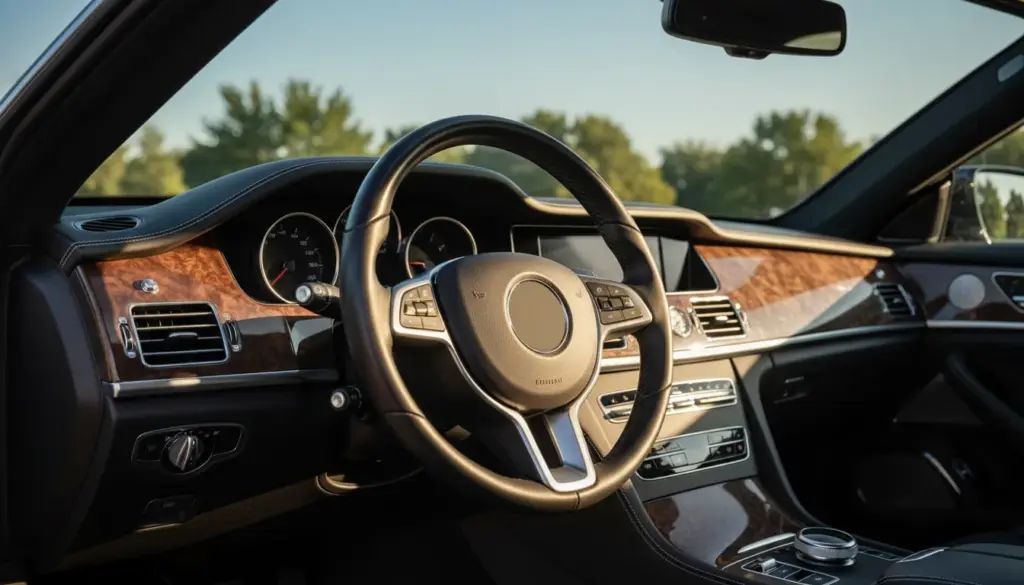
There is also a quieter benefit. When the car is not preheated like an oven, the interior materials stay more stable. Rubber seals around the doors and windows remain supple for longer. Batteries and tyres, both sensitive to sustained high temperatures, face a less punishing environment. The difference is gradual, but it accumulates over the life of the vehicle.
The table below sets out the practical contrasts between a car left in the open and one kept under a simple shade structure. A vehicle exposed to direct sunlight becomes much hotter inside, making seats and controls uncomfortable to touch. Covered parking reduces this solar exposure, so the cabin stays cooler and the air conditioning does not have to work as hard. Shade also helps protect the dashboard, leather, plastics, and paint from gradual fading or cracking. Over time, this can keep the car in better condition and make daily driving more comfortable.
| Factor | Open Driveway | Covered Parking |
|---|---|---|
| Cabin temperature at midday | Very high, slow to cool | Noticeably lower, faster to cool |
| Dashboard and trim ageing | Accelerated fading and cracking | Reduced UV and heat stress |
| Paint condition | Higher oxidation and etching risk | Better long-term gloss retention |
| Dust and debris accumulation | Direct settlement on all surfaces | Partial protection from above |
| Air conditioning load | High initial cooling demand | Lower starting temperature |
The point is not that a carport turns a driveway into a showroom. It simply removes the worst of the daily punishment, especially in a climate with intense sun and heat. For a household with two cars and a busy morning routine, that reduction in heat soak touches every departure. The cabin starts cooler, the air conditioning does not have to work as hard, and interior materials face less stress. Over time, this can help the vehicles stay in better condition.
Choosing Between a Carport and a Full Garage
When a Carport Is Enough
A carport suits a home where the main need is shade and the site already has secure storage for tools, bikes, and other equipment. This makes it a practical choice when lockable parking is not required. It is lighter than a garage, easier to ventilate, and often cheaper to build. The open sides allow coastal breezes to pass through, which helps reduce trapped humidity. In many Gulf neighbourhoods, a well-detailed carport also reads as a deliberate architectural element rather than an afterthought.
The structure can be as simple as a steel frame with a solid roof panel or as refined as a timber-look soffit that matches the house. The key is to block direct sun from above while allowing air to move through the sides. That cross-ventilation prevents the shaded space from becoming a heat trap of its own. This helps keep the car cooler and reduces stress on the interior and air conditioning. It also offers useful protection from dust and bird droppings.
When a Garage Makes More Sense
A garage earns its place when the household needs lockable parking, enclosed storage, or protection from more than sunlight. It keeps tools, spare parts, and seasonal equipment out of sight and out of the dust. It also offers a degree of security that an open carport cannot match. This is particularly true for homes that sit close to the street or remain empty for long stretches.
The trade-off is heat management. A closed garage in the Gulf needs ventilation, and ideally a shaded wall or roof treatment, to avoid becoming an oven. Without proper airflow, the trapped heat can actually accelerate the deterioration of interior materials and strain the air conditioning system. If the garage door faces west, the afternoon sun can turn the interior into a radiator unless the design accounts for it from the start. This makes a carefully designed covered parking structure a practical investment for protecting a vehicle from the region’s extreme climate.
Driveway Surface and Drainage
The surface under the car matters as much as the roof above it. Paving that reflects heat back up into the vehicle undoes some of the benefit of shade. Lighter coloured concrete or stone reduces that reflected load. A slight fall towards a drain or planted strip keeps water from pooling during the brief but intense rainy periods.
An open driveway can still work well if the car is used frequently and the owner accepts the long-term wear on paint and interior materials. But for a daily driver parked in the same spot every day, a covered bay is a practical upgrade rather than a luxury. The decision often comes down to how long the car sits still. It also comes down to how much the owner values the first minute inside the cabin.
Planning the Shaded Arrival at Home
The best covered parking feels like part of the house, not a metal box dropped on the front lawn. The roof line can extend from the main volume. The columns can match the entry detailing. The paving can continue from the front door to the car door without a change in level. That continuity makes the daily return home calmer and more dignified.
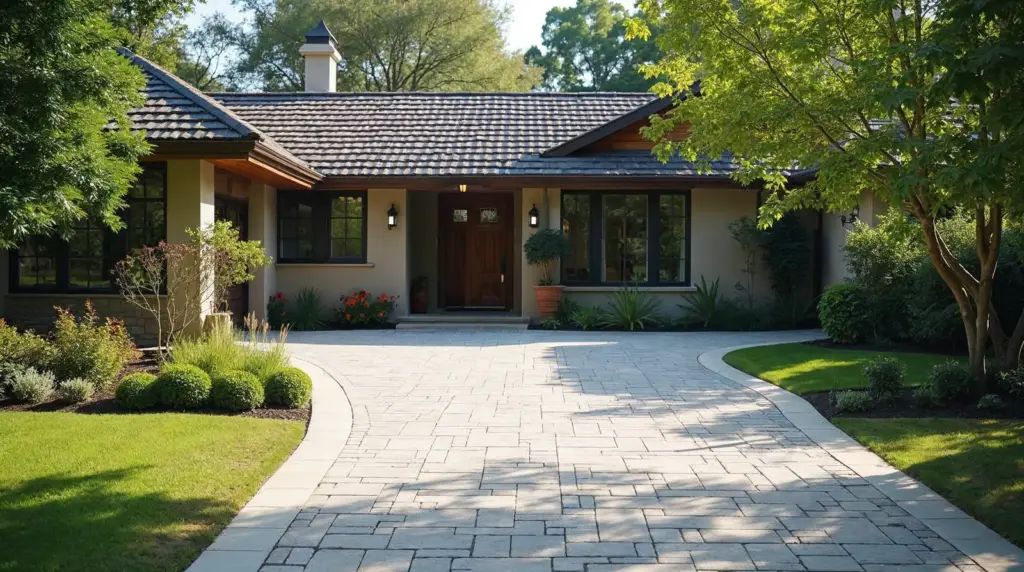
Position matters. A carport on the west side of the house blocks the harshest afternoon sun from the car but may also shade a blank wall and reduce heat gain inside the home. A carport on the east side protects the car during the morning but leaves it exposed for the hotter half of the day. The orientation of the site should guide the decision as much as the shape of the plot.
Shade cloth and lightweight canopies are a lower-cost option, but they need to be specified for Gulf conditions. Wind, dust, and ultraviolet radiation will test cheap materials quickly, especially when a car is parked beneath them every day. A solid roof panel with a reflective top surface and an insulated underside performs better over time. It also keeps the space below noticeably cooler, which reduces heat stress on the vehicle and makes the car more comfortable to enter.
Covered parking is not about turning a car into a museum piece. It is about removing the daily punishment of heat, UV, and dust. This helps the vehicle stay comfortable, clean, and composed for longer. In a climate where the sun dictates so much of how a house is planned, the shaded bay is one of the most useful rooms a home can have.