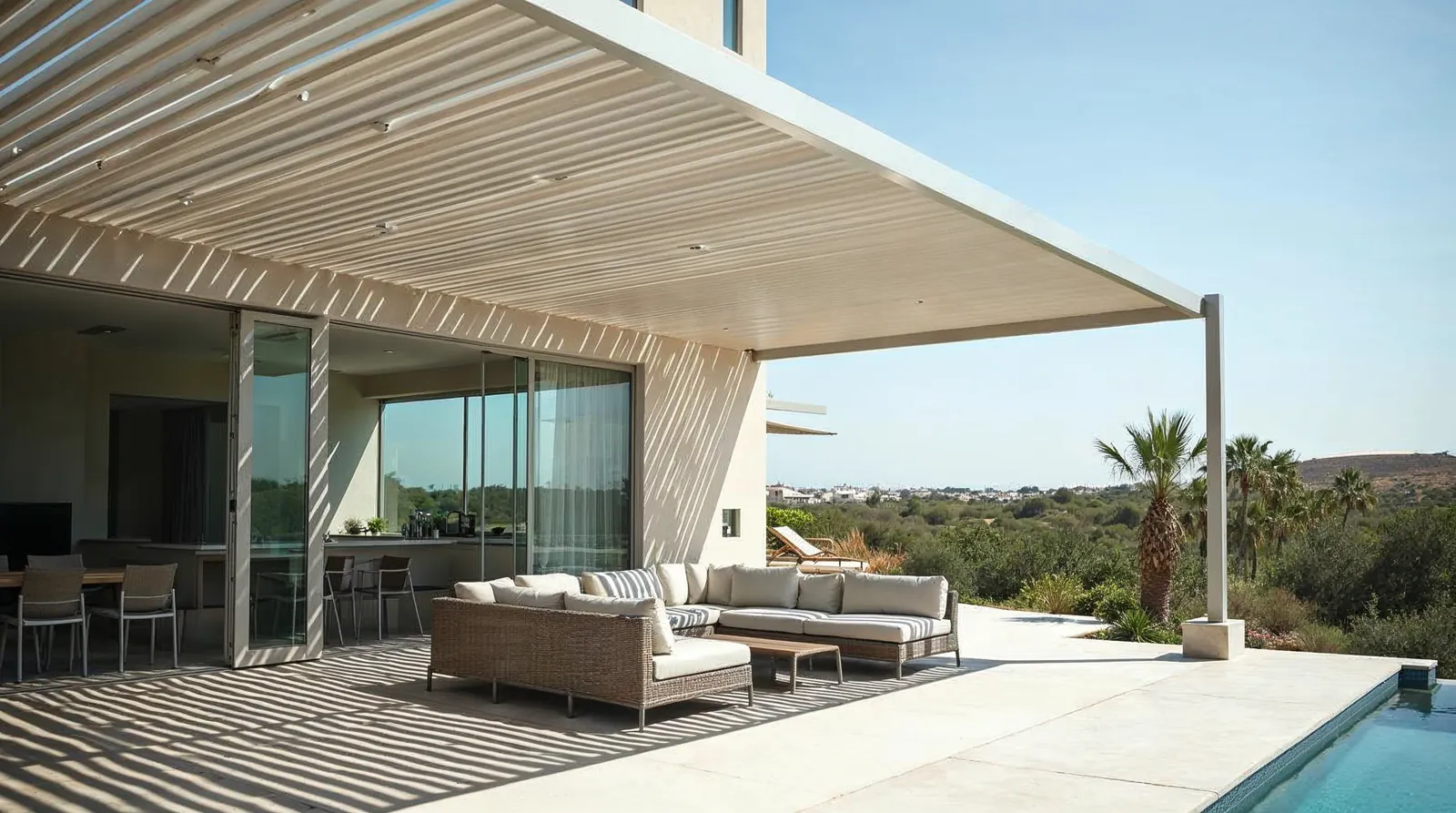
Living in the Gulf means sunshine is rarely the problem. The problem is what that sunshine does to a villa terrace by two in the afternoon. Paving heats until it is unpleasant underfoot, cushions fade, and a garden that looked inviting at breakfast becomes a place to walk through quickly on the way back indoors. Shade is the only thing that returns those hours to the household. It is not a finishing touch but a piece of the architecture itself.
A shade structure works best when it is considered at the same time as the outdoor space it protects. The position of a pergola, the angle of a sail and the height of an awning change how light moves across a wall, a pool deck or a seating area. When shade is added later, it tends to land where fixings are easy rather than where shadow is most useful. Planned early, it can shape the whole garden instead of patching over one corner of it.
Shade as a design decision, not an accessory
In Gulf summers, unshaded surfaces become more than uncomfortable. Exposed steel, rubber, concrete and plastic can rise well beyond 70 degrees Celsius under direct solar radiation. That makes playground equipment, pool decks and even walkways genuinely hazardous during peak hours. The same heat shortens the life of outdoor furniture, fades fabrics and weakens materials that were never specified for extreme UV exposure.
Because of this, shade coverage is treated as infrastructure in parts of the region. Dubai Municipality, for example, requires 70 to 80 per cent shade coverage for outdoor play areas. That figure is a useful reference point for villa owners too. A terrace that is only half shaded will still lose its most exposed strip to the afternoon sun. The goal is not to block every ray but to make the main activity zones usable from late morning until early evening.
Where shade should begin
The first site visit is the moment to think about shade, not after the decking or pool shell has been decided. A shaded lounger is somewhere to read. A shaded table beside the water is where lunch happens instead of indoors. The structure should be drawn on the same plan as the water, the paving and the planting, because a pergola added later ends up where the footings can go rather than where the shadow is wanted.
Villa owners often focus on covering the pool itself. In a Gulf summer it is frequently better to leave the water open and shade the deck around it. The water stays cooler when it can release heat at night, while the deck, the loungers and the route from the house to the pool are the surfaces that actually burn. Shade changes how the whole garden is used, not just how the water looks.
Choosing the right structure for each part of the villa
Different areas of a Gulf home need different shade solutions. A carport has different requirements from a balcony, and a poolside lounge zone behaves differently from a garden path. The right choice depends on how much weather protection is needed, how fixed the structure should be, and how much visual weight the architecture can carry. Matching the structure to the space keeps the villa from looking cluttered.
Pergolas are the most popular option for villa terraces and garden seating areas because they combine overhead shading with a strong architectural presence. Aluminium pergolas with louvred roof systems allow the level of shade, ventilation and rain protection to be adjusted as the weather changes. A louvred roof can follow the sun through the afternoon. It can open to the sky on a winter evening and close against a rare shower.
Shade sails for flexible coverage
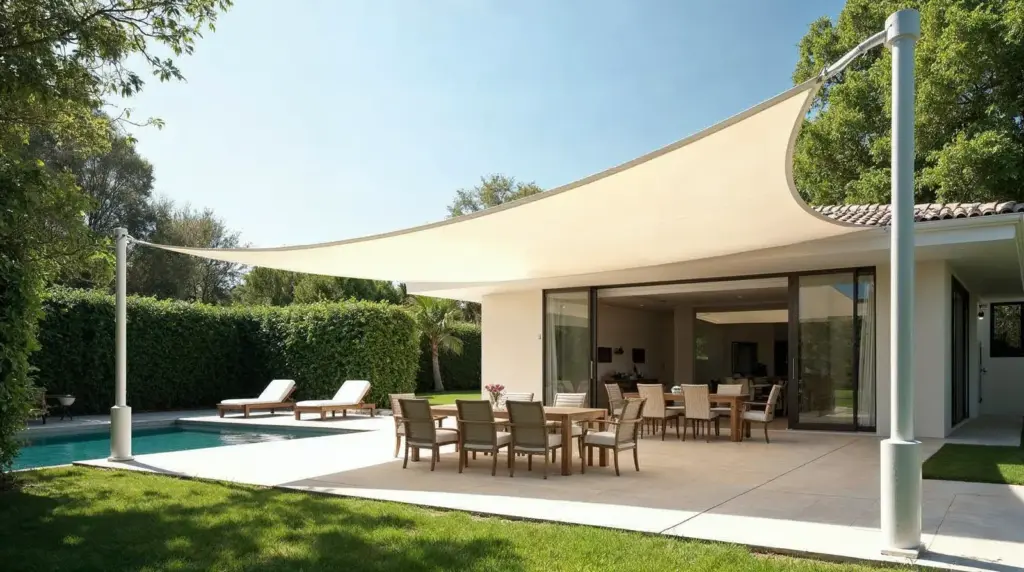
Shade sails are tensile fabric structures stretched between anchor points. They block a high proportion of harmful UV rays while adding a clean, contemporary line to a pool area, parking space, terrace or play zone. Because they are customised, they can be shaped to fit awkward corners where a fixed pergola would feel heavy. The fabric and marine quality hardware are chosen to survive blazing summers and occasional windy days.
For villa owners who want shade without a permanent roof, sails are a practical middle ground. They can be tensioned high over a seating area or angled to cut low afternoon sun from the west. The key is professional installation. Wind loads in the Gulf are real, and a poorly fixed sail becomes a hazard. The anchor points, edge detailing and fabric choice matter as much as the shape.
Awnings for windows, doors and balconies
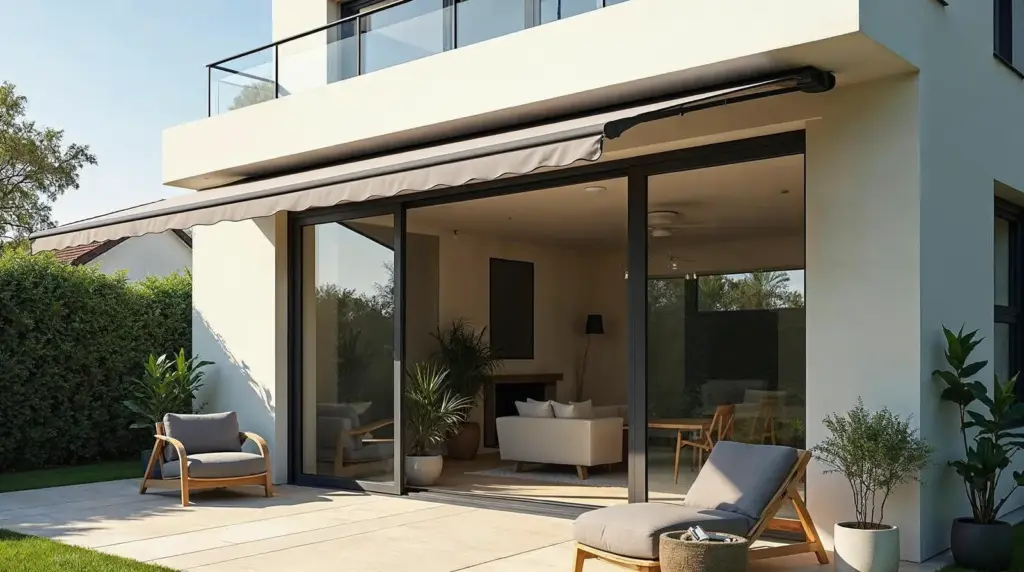
Awnings work where the sun hits the building itself. A professionally installed awning can reduce direct solar heat gain through glazing by up to 70 per cent. This cuts air conditioning costs during summer months and keeps interiors naturally cooler. Fixed frame awnings suit windows that need constant protection. Retractable cassette awnings give residents the choice to enjoy direct sun in cooler months.
Balconies and sliding doors benefit most from this approach. The shade sits close to the facade, so it protects the glass and the threshold without taking up garden space. Retractable systems also let the villa change character through the year. In January the balcony can be open and bright. In August it can be held in shadow from mid-morning onwards.
Materials and engineering for Gulf conditions
Shade structures in the Gulf are not decorative accessories. They are engineered systems that must hold up under high UV, heat and wind. The fabric, the frame and the fixings all need to be specified for the climate rather than imported from a milder one. A shade sail that works in a European garden may degrade quickly under Gulf sun if the fabric has not been selected for extreme UV exposure.
The list below covers the main points to check when specifying a shade structure for a villa. These are practical details that affect how long the system lasts and how well it performs in summer. For example, the fabric should be made from high quality UV resistant materials that can block up to 98% of harmful rays. The hardware also needs to be marine quality so it can withstand the harsh UAE climate, including blazing heat and occasional wind. Paying attention to these details helps ensure the shade system remains durable and effective for years.
- Choose UV-resistant fabric rated for high exposure, not standard outdoor textile.
- Use marine quality hardware for sails and tensile structures, especially near the coast.
- Check wind load calculations for the specific site, including the height and openness of the area.
- Ask for fire-retardant fabric where local compliance or proximity to the house requires it.
- Consider the solar angle in late afternoon, when low sun reaches further under overhead structures.
- Match the frame material to the exposure, with aluminium often preferred for louvred systems.
- Plan for drainage so water does not pool on fabric or run onto door thresholds.
Engineering is not only about surviving storms. It is about how the structure behaves in normal daily heat. A steel frame that absorbs heat all afternoon will radiate warmth onto the people sitting beneath it. A light coloured fabric reflects more energy than a dark one. Small material choices change the temperature of the shaded space itself.
Bringing shade and landscape into one plan
A pool garden without shade is used at dawn, after sunset and hardly at all in between. The water may be pleasant, but the deck burns and the loungers are untouchable. Shade turns that garden back into a place for the afternoon. The choice of structure, its position and how it is fixed decide how well it does that job. This is why shade belongs in the original landscape drawing.
When the pool, the garden and the shade sit under one contract, the footings, drainage and planting can be coordinated from the start. A pergola placed beside the water can shade the lounge zone without blocking the view. A sail can cut the western sun while leaving the lawn open. The result is an outdoor room that works as a whole rather than a collection of separate additions.
Shade is what makes a Gulf villa feel generous in summer. It creates the cool threshold between the air conditioned interior and the bright garden, and it gives the household a reason to stay outside. The best shade design does not announce itself loudly. It simply makes the terrace, the pool deck and the balcony feel as if they were always meant to be used at three in the afternoon.