A driveway in Doha or Dubai lives a harder life than most people imagine. It endures weeks of air temperatures above forty-five degrees, which push surface readings far higher, while the ground beneath dries out and shifts in ways that quietly pull slabs apart. When a rare storm finally arrives, the water has nowhere to go on a flat, sealed expanse, so it sheets across the surface and pools at the lowest corner. These three forces, thermal expansion, unstable soil and sudden runoff, are what turn a smooth forecourt into a cracked, rutted mess within a few summers.
Choosing a surface is not really about picking the best-looking aggregate or the lowest price per square metre. It is about deciding how much maintenance you are willing to live with over the next two decades. A material that works beautifully on a shaded European lane can soften, fade or fracture under the Gulf sun. The good news is that several options are genuinely engineered for these conditions, and the differences between them are practical enough to weigh up over a single coffee. What follows is an honest look at the surfaces that stay intact when the mercury climbs.
The Real Demands of a Gulf Driveway
A driveway here faces three overlapping stresses that a temperate climate never dishes out at the same intensity. The first is relentless solar radiation, which degrades binders, bleaches pigments and forces materials to expand every afternoon and contract every night. That cycle works joints and weak points like a fatigue test in a laboratory. The second stress is the soil itself, which loses moisture and shrinks during the long dry season, then swells suddenly when rain arrives. Any rigid slab sitting on that moving ground will eventually crack unless it has room to flex or joints that can absorb the movement.
The third stress is water behaviour during the brief but violent downpours that punctuate Gulf winters. A traditional impermeable driveway acts like a giant funnel, sending sheets of water toward the garage door or the street drain. If the falls are imperfect or the drain is overwhelmed, the water sits, seeps into hairline cracks and accelerates the damage. A surface that lets water drain straight through it removes that problem at the source. These three demands, heat, ground movement and drainage, should shape every decision that follows.
The Shortlist of Materials Worth Considering
Not every surface sold as a driveway material belongs on a Gulf shortlist. Asphalt can soften in extreme heat and even release a noticeable odour when the sun beats on it for hours. It also absorbs warmth rather than reflecting it, which makes the area around the car uncomfortably hot long after sunset. Loose gravel is cheap and drains freely, but it scatters under tyres, ruts in high-traffic zones and tracks into the house on shoes. Those two options work for long rural approaches or tight budgets, but they rarely satisfy a villa owner looking for a clean, low-maintenance forecourt.
That leaves four materials that genuinely perform under Gulf skies: resin bound stone, resin bonded aggregate, interlocking concrete pavers and plain concrete laid with proper expansion joints. Each has a distinct personality and a different relationship with heat, water and weight. The table below lays them out side by side so the trade-offs are visible at a glance. No single surface wins on every count, which is why the choice should follow the specific demands of your plot.
| Surface | Best for | The honest catch |
|---|---|---|
| Resin bound | Seamless, permeable, refined look on flat drives | Needs a sound base and is a premium finish, not a budget one |
| Resin bonded | Slopes, ramps and anywhere maximum grip matters | Rougher texture and sealed, so it requires proper drainage falls |
| Interlock pavers | Heavy vehicles and repairable unit-by-unit surfaces | Joints collect sand and weeds and the surface is not seamless |
| Plain concrete | Heavy loads at the lowest upfront cost | Cracks without proper joints, glares white in sun and seals water out |
Resin Bound Stone as the All-Round Answer
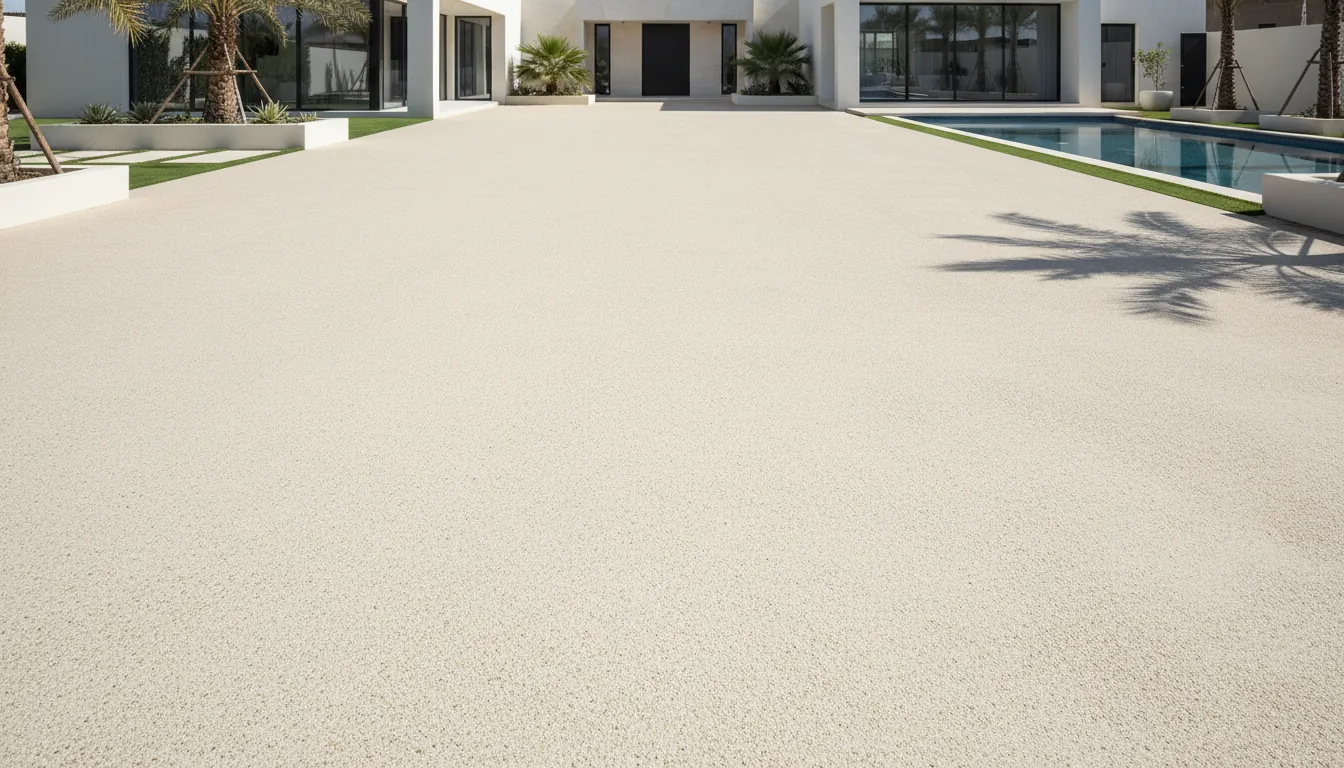
For a flat villa forecourt, a resin bound surface does the most things well at once. It is a stone carpet made by mixing natural aggregate into a UV-stable resin and trowelling it smooth, which produces a single, joint-free layer that reads as refined rather than industrial. Because it is permeable, a sudden storm drains straight through the surface into the ground below instead of pooling at the garage door. A pale, light-reflecting aggregate also stays noticeably cooler underfoot than dark asphalt or grey concrete, which matters when you walk barefoot to the car. The catch is honest: resin bound needs a stable, well-compacted base to perform, and it is a premium finish with installed costs starting from around AED 170 per square metre plus a one-off mobilisation fee of roughly AED 3,500 per project.
When Resin Bonded Makes More Sense
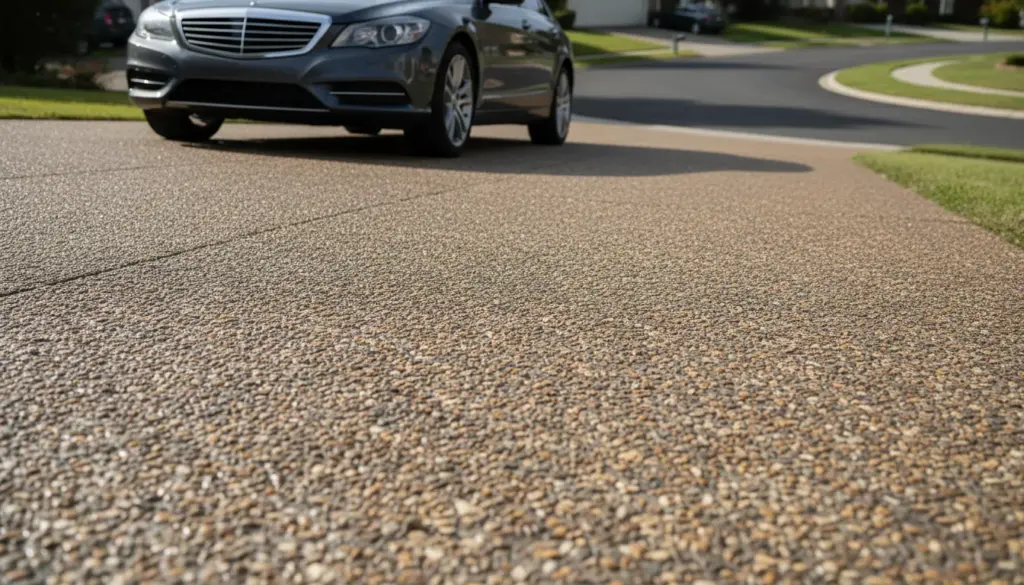
Resin bonded surfacing is a different technique often confused with its bound cousin. Here the resin is applied to the base first and the aggregate scattered on top, which leaves the stones sitting proud of the binder rather than fully encased. The result is a rougher, grippier texture that excels on sloped driveways, ramps leading to basement parking and anywhere vehicle traction is the overriding concern. It is a sealed surface, however, so it must be laid with a deliberate fall to channel rainwater toward a drain or a soft landscape edge. If your plot is dead flat and you want a continuous, permeable finish, resin bound is the more natural fit. If your drive tips downward toward the street, resin bonded earns its place on the shortlist.
Pavers and Concrete for Heavy-Duty Needs
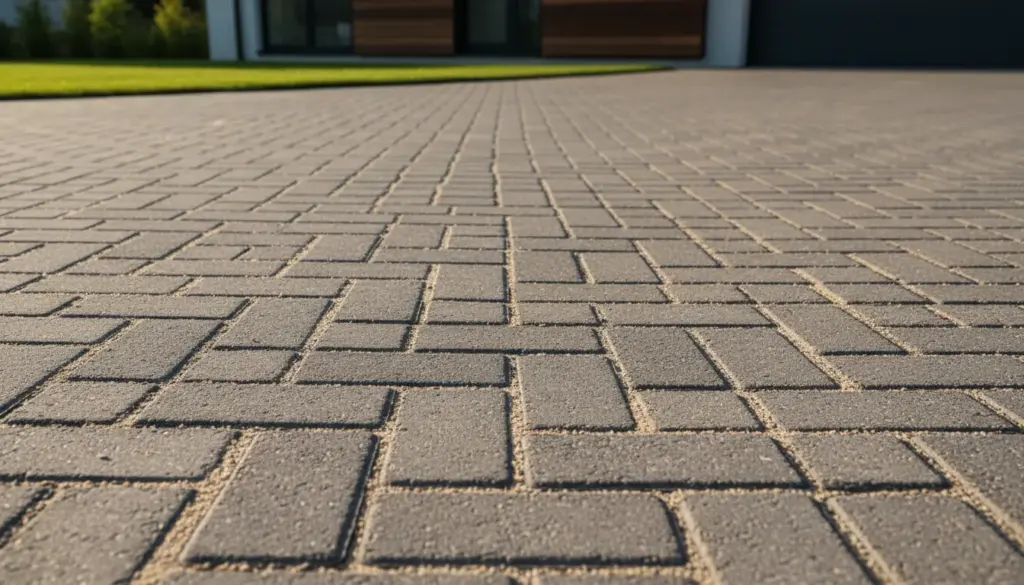
Interlocking concrete pavers are the workhorses of the driveway world, especially where heavy vehicles or frequent turning manoeuvres are part of daily life. Because the surface is made of individual units, a damaged paver can be lifted and replaced without disturbing the rest of the field. That repairability is a genuine long-term advantage, though it comes with a maintenance task of its own. The sand-filled joints between pavers gradually wash out, collect weed seeds and need topping up every few seasons to keep the blocks from shifting. For many homeowners, a little sand-sweeping every spring is a fair price for a surface that stays flat and intact through the hottest summers on record.
Plain concrete remains the default for many builders because it is tough, cheap and familiar. A properly poured slab with expansion joints cut at the right intervals can last for decades, and its light colour reflects sunlight rather than absorbing it. The downsides are well documented: concrete cracks when the ground moves, it seals water out completely so drainage falls must be precise, and its pale grey surface can throw a harsh glare across the garden in the middle of the day. For a utility driveway that sees heavy trucks or construction traffic, plain concrete is still hard to beat on cost per square metre.
Why Expansion Joints Are Not Optional
If you choose concrete, the single most important detail is the expansion joint. These are the deliberate, straight grooves cut into the slab that give it room to swell and shrink without tearing itself apart. Skipping them, or spacing them too far apart, is a common reason driveways develop spiderweb cracks. The joints should be planned before the pour, not added as an afterthought, and they need to align with any existing cracks in the base or changes in the slab geometry. Pavers handle thermal movement differently by design, each unit sitting slightly apart from its neighbours so the whole surface can expand and contract without concentrating stress in one place.
Drainage That Works With the Surface
Permeable surfaces like resin bound and some open-graded paver systems solve the drainage question by letting water pass straight through. This mimics the way natural ground behaves and reduces the volume of runoff that a property has to manage. On a flat plot with no obvious place to send stormwater, a permeable driveway can be the simplest way to avoid standing water and the slow damage it causes. Sealed surfaces such as resin bonded and plain concrete demand a different approach. They need a deliberate slope to guide water toward a linear drain, a channel or a planted area that can absorb the flow. Getting that fall right during the base preparation stage is everything, and the best installers check drainage with a hose test before the final surface ever goes down.
Choosing a driveway surface for a Gulf home is ultimately a decision about which set of compromises you prefer to live with. Resin bound offers a refined, permeable finish at a premium price. Resin bonded delivers grip on slopes but needs careful drainage planning. Pavers give you repairability and heavy-load tolerance in exchange for joint upkeep. Plain concrete is the budget workhorse that demands proper jointing from day one. Match the material to the specific demands of your plot, the loads it will carry and the level of maintenance you will realistically perform, and the surface will stay sound long after the thermometer crosses fifty degrees.