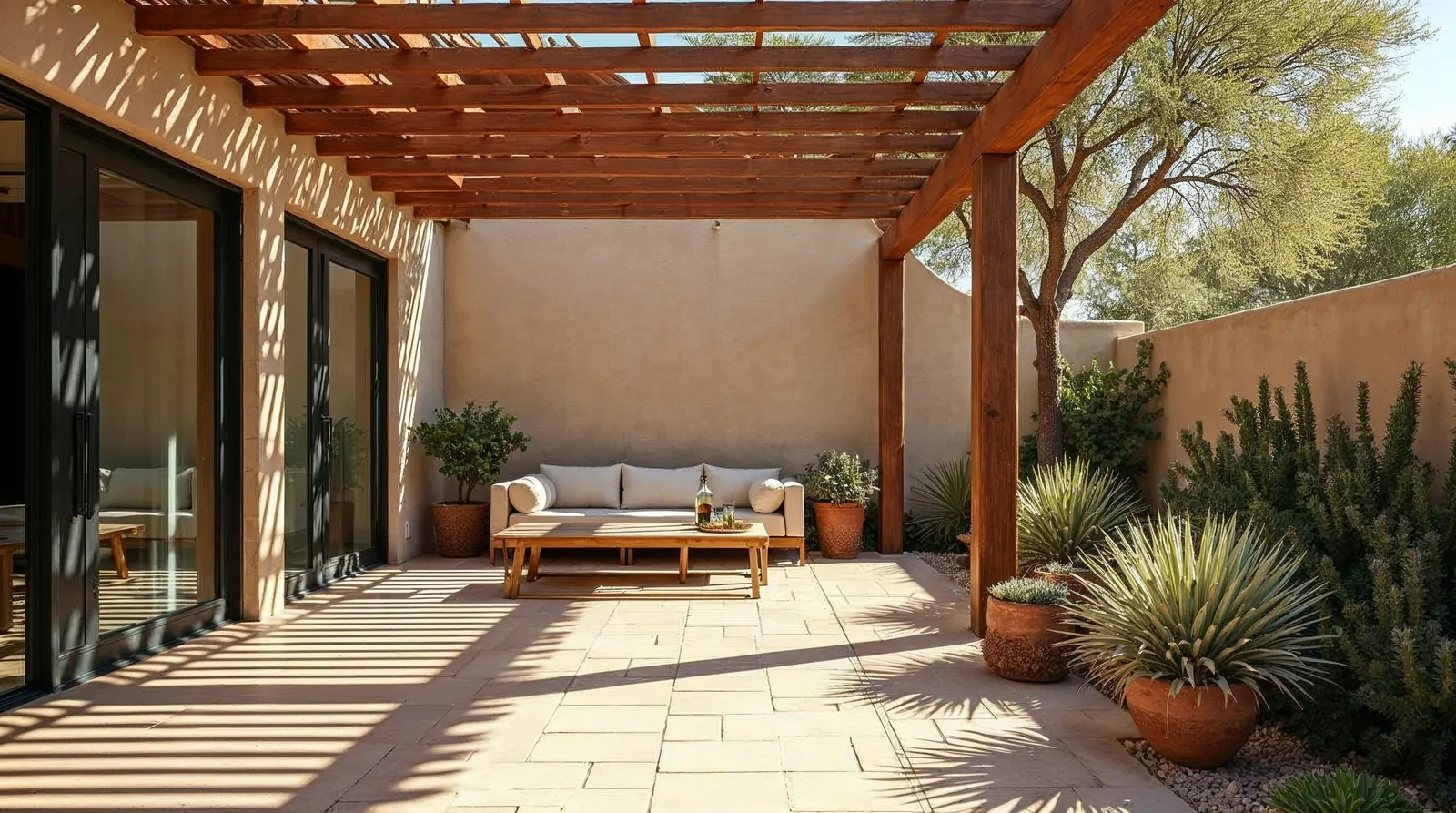
Heat does not arrive in a Gulf garden evenly. A paved corner facing the late sun can feel significantly hotter than a patch of ground under a mature canopy. The difference is not luck. It is design. When you plan landscaping around shade, you change the way a house and a garden absorb, hold and release heat. You create a micro-climate that works in your favour long before the air conditioning is switched on.
Shade is not a decorative extra. It is a structural layer of the home. A well-placed tree or a carefully proportioned pergola can lower surface temperatures, protect smaller plants, reduce reflected heat from walls and make a seating area feel like a room rather than an oven. In a climate where direct sun can overwhelm a yard by mid-morning, the first design question should always be where shadow falls and for how long.
Why shade changes the entire garden climate
Direct afternoon sun overheats leaves, burns tender growth, speeds up water evaporation and pushes surface temperatures on patios and walls to punishing levels. When hard surfaces absorb heat all day, they release it slowly after sunset. This keeps the garden warmer long after the air has begun to cool. Roots struggle when the ground bakes. Plants that look healthy in the morning can be stressed by late afternoon.
A shaded area holds moisture longer, supports a wider range of plants and gives the whole garden a cooler core. Studies of shaded neighbourhoods show they can run one to five degrees cooler on hot summer afternoons than areas with less cover. One degree may not sound dramatic, but across a wall or a paved courtyard it changes how the space feels and how much energy the house needs to stay comfortable. Shade also works during power cuts. A garden with mature canopy cover becomes a refuge when air conditioning is unavailable. The more you reduce heat gain at the source, the less you depend on mechanical cooling to make the outdoors tolerable.
Pergolas as a first line of defence
A pergola is the fastest way to create usable shade over a patio, deck or seating area. Unlike a tree, it does not need years to mature. It provides shade from the day it is installed and keeps doing so all year. That consistency matters in the Gulf, where the sun is relentless even in seasons when deciduous trees might drop their leaves. A pergola also defines an outdoor room, giving a terrace a sense of enclosure and purpose.
The amount of shade depends on the spacing and size of the rafters. Closer rafters produce deeper shade, while wider spacing lets more light through, which can suit plants that need filtered sun. Some pergolas include retractable fabric shades that can be adjusted for different times of day. That flexibility is useful when a space needs morning light but full protection in the afternoon. Pergolas also support climbing plants. Vines grown over the structure add a second layer of cooling. The leaves absorb sunlight, release moisture and lower the temperature directly beneath the canopy. This combination of built shade and living cover is one of the most effective ways to make a seating area comfortable without sealing it off from the garden.
Placing a pergola where heat builds
The best position for a pergola is over a surface that would otherwise absorb and radiate heat. That means patios, raised beds, container gardens and any paved area used during the day. Shading a hard surface has an outsized effect because stone, concrete and tile store far more heat than planted ground. A pergola over a west-facing terrace can transform a space that is unusable after noon into a shaded spot for late afternoon.
Local building codes should be checked before installation. The structure must be able to withstand wind loads and the weight of any added fabric or climbing plants. A custom-fabricated pergola can be detailed to fit the exact dimensions of a courtyard or roof terrace. A kit made of wood or PVC is often quicker to install. Either way, the goal is the same: interrupt the sun before it reaches the surface where people sit and plants grow.
Trees as long-term cooling infrastructure
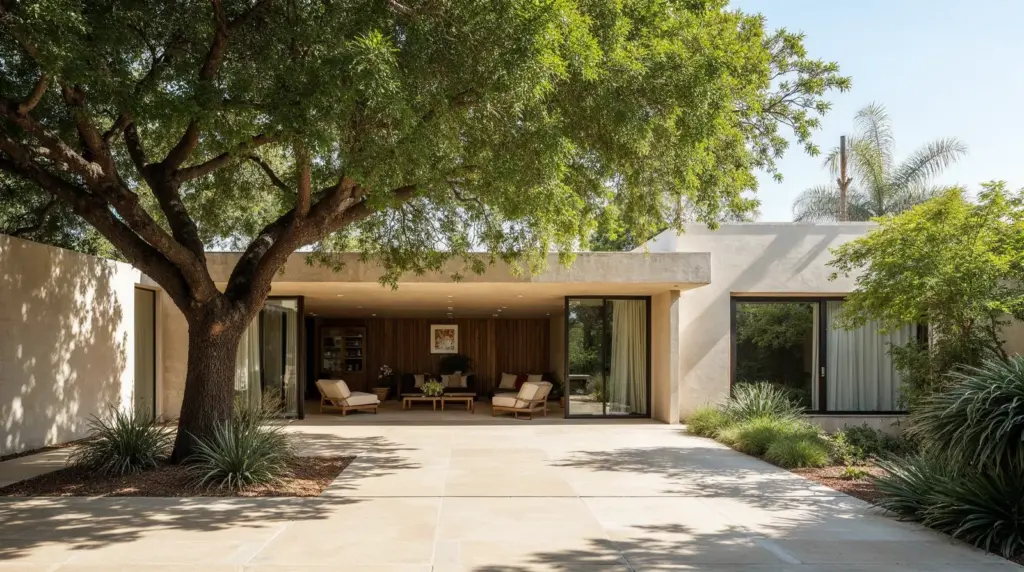
A tree is a cooling system that grows more effective every year. A single large canopy tree can shade windows, walls and driveways, keeping the immediate environment noticeably cooler. The temperature of grass under a tree can be about ten degrees Fahrenheit cooler than unshaded grass. On hard surfaces the reduction is even greater. That shade also lowers the heat reflected from concrete and reduces the load on air-conditioned rooms.
Placement is the most important decision. Planting on the south and west sides of a home provides maximum shade during the peak heat of the day. A tree on the south-west corner of a garden will cast its shadow across the hottest part of the yard in the afternoon. The leaves fall in autumn on many species, which allows winter sun to reach the house. That seasonal balance is valuable in a climate where winter warmth is welcome. Desert-adapted trees are especially valuable because they provide shade without demanding excessive water once established. A slower-growing specimen with strong structure and appropriate mature size will serve the garden for decades.
Choosing and positioning trees with intent
Start with a site map. Mark existing vegetation, the position of the house, paved areas and the path of the sun through the day. Then place trees where they will shade walls, windows, roofs, skylights and hardscaping. A tree that shades a west-facing wall in summer can reduce indoor temperatures in the rooms behind it. A tree that shades a driveway stops that surface from radiating heat back into the garden after dark.
Consider starting with a smaller tree if budget is tight, but be patient. For quicker results, a mature specimen can be planted if the budget allows. The following list covers the main roles trees and structures can play in a shaded garden. Trees can cool the surrounding air and protect smaller plants underneath. Pergolas and trellises can filter harsh sunlight while still letting some light through.
- Shade walls and windows on the south and west sides to reduce heat gain inside the home.
- Place a canopy tree over seating areas to create a cool outdoor room during hot afternoons.
- Use pergolas over patios and raised beds to provide immediate shade while young trees establish.
- Grow climbing vines over pergolas to add a living layer of cooling and moisture.
- Plant smaller trees near paved areas to reduce reflected heat from concrete and stone.
- Choose desert-adapted species that need less water once they are established.
- Preserve existing mature trees wherever possible, since their shade value takes years to replace.
Each choice works best when it responds to a specific problem. A tree that shades a wall is doing different work from a pergola that shades a seating area. Built structures like pergolas provide immediate cover, while trees offer growing, self-renewing shade over time. The strongest gardens combine both approaches. This way, you get quick relief from heat while also investing in long-term cooling for your yard.
Hardscaping, water and the wider micro-climate
Shade works best when the surrounding surfaces cooperate. Light-coloured and permeable hardscaping reflects less heat and allows water to drain into the ground. Dark paving absorbs solar energy and releases it slowly, undoing some of the benefit of a shaded canopy. Grading for drainage around the house and for water retention on the grounds helps plants establish and keeps the soil cooler.
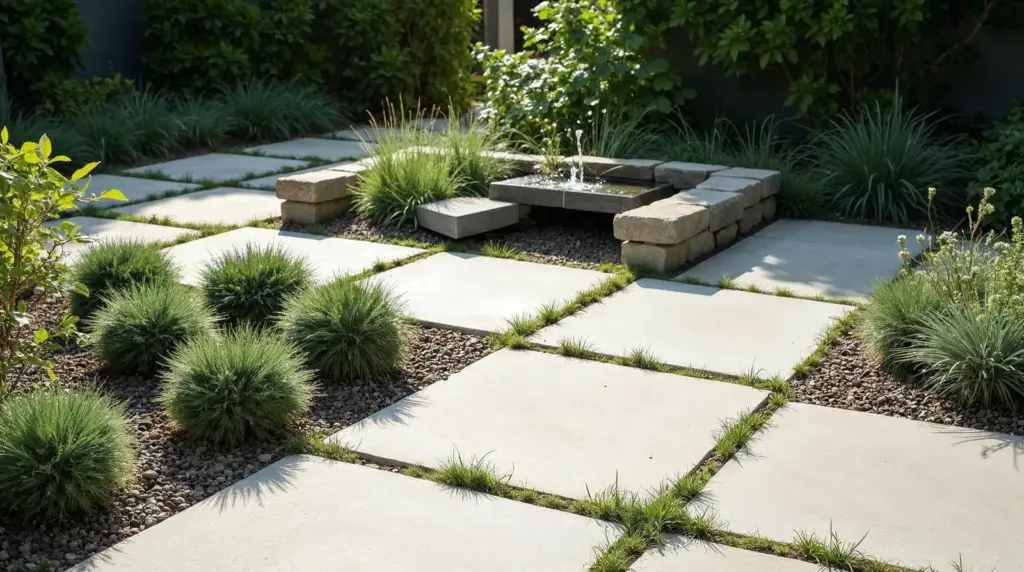
Water features can also play a role. Moving water has an evaporative cooling effect that lowers the temperature of the air immediately around it. A small fountain or rill placed near a seating area can make the space feel fresher without using large amounts of water. Mulch choices and smart irrigation habits support the same goal by keeping roots cool and reducing evaporation from the soil surface. Green roofs on pergola structures, garden rooms or outbuildings are another option. A vegetation-covered roof absorbs less heat than a bare one and releases moisture into the air. This can reduce the temperature of the space beneath and soften the look of the structure.
Designing cool zones that hold up through summer
A cool zone is a small area with conditions that differ from the surrounding space. It might be shadier, less windy or more protected. When you combine smart shade structures with the right plants, you create pockets of comfort that work with the desert instead of against it. These zones become the places where the family gathers, where plants survive the worst of the year and where the garden still feels alive in August.
The best results come from thinking in layers. A pergola shades a terrace. A tree shades the pergola. Vines climb the posts. Ground covers and mulch keep the soil cool. Each layer reduces the heat load on the next. The result is a garden that feels measurably cooler, uses less water and asks less of the air conditioning inside the house. Landscaping for shade is not a quick fix. A tree takes time. A pergola takes planning. But the investment pays back every afternoon the family can sit outside without retreating indoors. In a hot climate, that is the difference between a garden you look at and a garden you actually use.