
Twenty minutes should not matter too much, now would it? Dubai-based Kriti Kohli thought so too, until a quick trip to the bank served as a warning tale about leaving a car parked in the UAE heat. It was so hot when she returned to the car, she notes. Worse, the stuffiness just leaves you more fatigued. The discomfort is real, but it is only the beginning of the story.
Apart from the stuffy cabin, a scorching steering wheel and hot seatbelts, the real damage occurs where you cannot see it. Extreme heat accelerates wear and tear across the vehicle. The car becomes vulnerable to weaker batteries, and the rubber hoses begin to perish. Electronics age faster and interior materials slowly break down after months of relentless exposure to higher temperatures and UV rays. Understanding what the heat is doing long before it leaves you stranded is the key.
Why a Parked Car Becomes a Heat Trap
The good news is that today’s vehicles are built to operate in temperatures far higher than the weather outside. The bad news is that it is often the supporting components, not the engine itself, that suffer first. Sujit John, General Manager at Rapid Performance Auto Repairing LLC, explains that the key system does not get affected. But in models with passive keyless entry or door code entry, the sensitive electronics can deteriorate and cause malfunction. Drivers often assume the engine is under the greatest strain.
Mechanics say prolonged heat slowly ages the plastics, rubber and electrical components surrounding the engine. When summer grips the UAE, temperatures routinely exceed 45 degrees. For cars parked under the sun, interiors quickly turn into greenhouses, with cabin temperatures soaring beyond 70°C. Meanwhile, the asphalt bakes tyres from below, says Gurmeet Singh, Managing Director of Axis Workshop. Prolonged exposure to such extreme heat breaks a vehicle down at the molecular level.
What Technicians See During Routine Servicing
That gradual deterioration is exactly what technicians see during routine servicing. The rubber and plastic components age much faster in the heat, explains Athina Doyle, General Manager at I Service Any Car. The coolant hoses become brittle, O-rings start to harden, and electrical connectors and plastic covers deteriorate. Before you know it, you have got coolant or vacuum leaks that could have been picked up during a routine inspection. Engine oil, coolant and transmission fluids are designed to perform under extreme heat and pressure.
Far above ambient temperatures, those fluids keep working. But the connecting hoses and other rubber gaskets, washers and connectors around them are the weak points. Heat does not usually kill a modern engine outright. It nibbles at the edges of the system until a small leak becomes a big repair. A technician who looks closely can catch these signs early. A driver who ignores them may not notice until the warning light comes on.
Hidden Damage in the Cabin and on the Body
Rubber equipment will deteriorate quickly too. Leaving the car parked in the sun for a long time affects parts made of rubber such as wipers or the edge of the windshield. Heat hardens and hastens the deterioration of the rubber. It will also decrease the performance of these parts. The paint will fade quickly because sunlight has UV rays that can affect the surface. Sunlight shines directly onto the car’s body and alters the colour, making lighter cars appear more yellowish and darker cars look faded.

Interior Materials and Films Under Stress
These parts will dry and become cracked. For parts with fabric components, the colour will fade faster than it should. Metal components like seatbelt buckles can become hot enough to cause severe contact burns. This explains why your car gets so hot when parked. UV rays and heat can damage dashboards, leather, plastics and adhesives. Pay attention to unusual signs, because drivers know their vehicles best.
The Slow Wear on Fluids, Battery and Electronics
Hot weather can heat up and deteriorate the engine oil. This will reduce the service life and efficiency of the engine oil. The battery deteriorates too. Heat accelerates the chemical reactions inside a battery, which sounds helpful but actually shortens its working life. A battery that survives milder climates may fail after a single hot summer if it is already weak. The heat under the bonnet adds to the strain every time the car is parked and then restarted.
Electronics age faster in sustained high temperatures. Keyless entry modules, door code sensors and dashboard displays all sit inside a hot cabin for hours each day. The damage is rarely dramatic at first. It shows up as a slow response, a flickering screen or a warning that comes and goes. Over time, these small failures add up. A car that is parked outside every day in a hot climate is effectively living in an oven for much of the year.
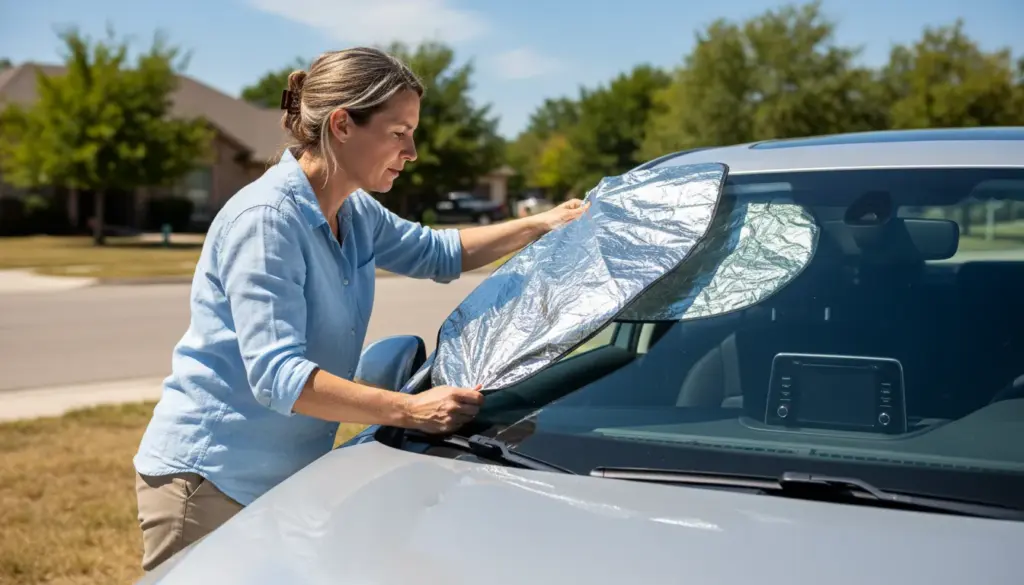
- Park in shade or use a reflective windscreen cover to cut cabin heat before it builds.
- Check coolant and oil levels more often in summer, because heat makes small leaks easier to miss.
- Inspect rubber hoses, wiper blades and door seals for brittleness or cracks every few months.
- Use a sunshade for the rear window and side windows if the car sits outside all day.
- Clean and condition leather seats and dashboards to slow drying and cracking from UV exposure.
- Test the battery before the hottest months, especially if it is older.
- Open the windows for a minute before driving off to release the worst of the trapped heat.
These small habits do not stop the sun entirely. But they change the rate at which a car ages. A car that is shaded and checked regularly will keep its interior, paint and rubber parts in better condition for longer. The goal is not to make a parked car cool. The goal is to stop it from becoming a slow-cooking failure waiting to happen.
What Heat Does to Tyres and Underbody Parts
The asphalt bakes tyres from below, and that heat works its way into the rubber compound. Tyres are built to handle high road temperatures, but constant exposure to a hot parking surface adds stress. The sidewalls can develop small cracks over time, especially if the tyres are old or underinflated. A tyre that sits on scorching tarmac every afternoon will age faster than one parked in a shaded garage. Checking tyre pressure in the morning gives a truer reading than checking it after a drive.
Underbody plastic covers, fuel lines and suspension bushings also absorb heat reflected from the road. They do not get the same attention as paint or upholstery, but they suffer the same slow degradation. A cracked plastic cover may seem minor until it lets dust and moisture into places they should not reach. On Gulf roads, dust is already a constant presence. Heat makes every small opening a little wider and every rubber seal a little less flexible.
Practical Ways to Protect a Parked Car
Shade is the simplest defence. A carport, a shaded parking space or even the shadow of a building during the hottest hours will reduce cabin temperature and UV exposure. If shade is not available, a reflective windscreen cover is the next best thing. It keeps the dashboard and steering wheel from turning into burn hazards. Side window shades help too, especially for rear passengers and child seats. The difference is immediate when you open the door.
Regular inspections matter more in this climate than in milder ones. A quick look at hoses, belts and seals every few weeks can catch brittleness before it becomes a leak. Cleaning the car often also helps, because dust and sand act as abrasives on paint and trim. Wax or a quality sealant adds a thin layer of protection against UV rays. None of this is complicated, but it requires consistency. A car parked outside in Doha or Dubai faces the same sun day after day.
When to Ask a Professional
Drivers know their vehicles best, so pay attention to unusual signs. A sweet smell near the bonnet can mean a coolant leak. A slow crank in the morning can mean the battery is struggling. A change in the way the air conditioner sounds or smells may point to a system working too hard after repeated heat soak. These are not problems to ignore until the next service. A technician can check the specific weak points that heat attacks first.
No car is immune to the Gulf summer. The damage is slow, and it often starts where you cannot see it. But a parked car does not have to become a casualty of the sun. With shade, regular checks and a little attention to the materials that fail first, you can keep it running well and looking decent for years. The heat will still be there. Your car just does not have to take the full force of it alone.